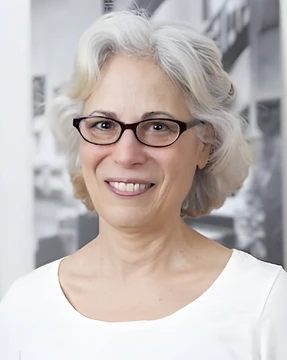
Charles Taylor
Canadian philosopher and professor emeritus at McGill University, known for political philosophy and the Bouchard–Taylor Commission.

Charles Margrave Taylor (born November 5, 1931) is a Canadian philosopher and professor emeritus at McGill University. He is best known for his contributions to political philosophy, the philosophy of social science, the history of philosophy, and intellectual history. A devout Catholic philosopher, his work has earned him the Kyoto Prize, the Templeton Prize, the Berggruen Prize for Philosophy, and the John W. Kluge Prize. In 2007, Taylor served with Gérard Bouchard on the Bouchard–Taylor Commission on reasonable accommodation with regard to cultural differences in the province of Quebec. He has also made contributions to moral philosophy, epistemology, hermeneutics, aesthetics, the philosophy of mind, the philosophy of language, and the philosophy of action.
- born
- 1931 (philosopher)
- field
- Politics, philosophy
- nationality
- Canadian
- known_for
- Canadian philosopher and social theorist
Verified Timeline
Lore & Background
Charles Margrave Taylor was born in Montreal, Quebec, on November 5, 1931, to a Roman Catholic Francophone mother and a Protestant Anglophone father, and was raised bilingually. His father, Walter Margrave Taylor, was a steel magnate from Toronto; his mother, Simone Marguerite Beaubien, was a dressmaker. His sister was Gretta Chambers. Taylor attended Selwyn House School from 1939 to 1946, then Trinity College School from 1946 to 1949. He earned a BA in history from McGill University in 1952, then went to Oxford as a Rhodes Scholar at Balliol College, receiving a BA with first-class honours in philosophy, politics and economics in 1955, and a DPhil in 1961 under Sir Isaiah Berlin. As an undergraduate, he started one of the first campaigns to ban thermonuclear weapons in the UK in 1956, serving as first president of the Oxford Campaign for Nuclear Disarmament. Recent research has explored his engagement with socialist politics during this time.
Reader's Guide
Taylor succeeded John Plamenatz as Chichele Professor of Social and Political Theory at Oxford and became a fellow of All Souls College. For many years, both before and after Oxford, he was Professor of Political Science and Philosophy at McGill University, where he is now professor emeritus. He was also a Board of Trustees Professor of Law and Philosophy at Northwestern University for several years after retiring from McGill. In 1986, he was elected a foreign honorary member of the American Academy of Arts and Sciences. In 1991, he was appointed to the Conseil de la langue française in Quebec, where he critiqued Quebec's commercial sign laws. In 1995, he was made a Companion of the Order of Canada. In 2000, he was made a Grand Officer of the National Order of Quebec. In 2007, Taylor and Gérard Bouchard headed a one-year commission of inquiry into reasonable accommodation for minority cultures in Quebec. Taylor calls himself a 'monomaniac,' concerned with developing a convincing philosophical anthropology. He rejects naturalism and formalist epistemology, and is part of the Canadian idealism tradition including John Watson, George Paxton Young, C. B. Macpherson, and George Grant. In 'To Follow a Rule,' he argues, following Wittgenstein, that all interpretation of rules draws upon a tacit background of 'forms of life' and practices incorporated into our bodies as habits, dispositions, and tendencies. Taylor was a candidate for the social democratic New Democratic Party in Mount Royal three times in the 1960s: in 1962 he came third, in 1963 second, and in 1965 he also lost.
Did You Know?
- Taylor started one of the first campaigns to ban thermonuclear weapons in the United Kingdom in 1956, serving as the first president of the Oxford Campaign for Nuclear Disarmament.
- He earned his Doctor of Philosophy degree in 1961 under the supervision of Sir Isaiah Berlin.
- Taylor was a candidate for the social democratic New Democratic Party in Mount Royal three times in the 1960s, coming in second in 1963.
- He was made a Companion of the Order of Canada in 1995 and a Grand Officer of the National Order of Quebec in 2000.
- Taylor calls himself a 'monomaniac,' concerned with only one fundamental aspiration: to develop a convincing philosophical anthropology.
A Bilingual Childhood and a Radical Youth
Charles Margrave Taylor entered the world on November 5, 1931, in Montreal, into a household shaped by two distinct cultural and religious traditions. His mother, Simone Marguerite Beaubien, was a Francophone Roman Catholic dressmaker, while his father, Walter Margrave Taylor, was an Anglophone Protestant steel magnate originally from Toronto. Raised bilingually in this cross-cultural home, Taylor's early intellectual formation was already marked by the negotiation between languages and worldviews. He attended Selwyn House School in Montreal before moving to Trinity College School, then earned a bachelor's degree in history from McGill University in 1952. His trajectory accelerated at Oxford, where as a Rhodes Scholar at Balliol College he completed a first-class honours degree in philosophy, politics, and economics in 1955, followed by a doctorate in 1961 under the supervision of Isaiah Berlin. Even as a student, Taylor was politically engaged: in 1956 he became the first president of the Oxford Campaign for Nuclear Disarmament, one of the earliest organized efforts in Britain to call for a ban on thermonuclear weapons. Recent scholarship has also uncovered his involvement with socialist politics during this period.
An Academic Life Spanning Three Countries
Taylor's academic career wove together institutions across three nations. He held the chair of Political Science and Philosophy at McGill University in Montreal for many years, a position he still occupies in emeritus status. At Oxford he succeeded John Plamenatz as Chichele Professor of Social and Political Theory and became a fellow of All Souls College. After his retirement from McGill, he took on a role as Board of Trustees Professor of Law and Philosophy at Northwestern University in Evanston, Illinois. His institutional affiliations were matched by a steady accumulation of public honors. In 1986 the American Academy of Arts and Sciences elected him a foreign honorary member. In 1991 he was appointed to Quebec's Conseil de la langue française, a body through which he publicly challenged the province's commercial sign legislation. He was named a Companion of the Order of Canada in 1995 and elevated to Grand Officer of the National Order of Quebec in 2000. These recognitions reflected a career that moved fluidly between the academy, public policy, and the broader cultural life of his home province.
The Monomaniac's Project: Against Naturalism
Taylor has described himself as a "monomaniac" whose single governing aspiration is to construct a convincing philosophical anthropology. His intellectual debts run deep through Hegel, Wittgenstein, Heidegger, and Merleau-Ponty, and he places himself within a Canadian idealist tradition that also includes John Watson, George Paxton Young, C. B. Macpherson, and George Grant. A central thread of his work is a sustained rejection of naturalism—the ambition, he argues, to model the study of human beings on the natural sciences, a program he traces to the logical positivist unity-of-science movement. His 1964 doctoral dissertation, The Explanation of Behaviour, mounted a systematic critique of B. F. Skinner's behaviourist psychology. He extended that challenge in 1972 with "Interpretation and the Sciences of Man," a direct response to the behavioural revolution in political science associated with David Easton, Robert Dahl, Gabriel Almond, and Sydney Verba. In "To Follow a Rule," he drew on Wittgenstein's notion of "forms of life" to argue that rule-following rests not on explicit propositions but on a tacit, embodied background of habits and dispositions, rather than on a set of articulated rules or premises.
Public Philosophy and a Life of Honors
Taylor's influence extended well beyond the seminar room into the public square. In 2007, alongside Gérard Bouchard, he co-chaired a one-year commission of inquiry in Quebec tasked with defining what constituted reasonable accommodation for minority cultures in the province—a role that placed his philosophical training directly in service of a live political debate over cultural difference and identity. His earlier service on the Conseil de la langue française, where he publicly challenged Quebec's commercial sign laws, had already demonstrated his willingness to apply philosophical reasoning to contentious policy questions. His contributions, spanning political philosophy, the philosophy of social science, the history of philosophy, and intellectual history, have been recognized with the Kyoto Prize, the Templeton Prize, the Berggruen Prize for Philosophy, and the John W. Kluge Prize. A devout Catholic, Taylor brought a personal moral and spiritual dimension to his scholarly work, weaving questions of human meaning and dignity into analyses that might otherwise remain purely technical. His career stands as a model of how rigorous philosophical inquiry can inform, and be informed by, the lived experience of a pluralistic society.
Frequently Asked Questions
Who is Charles Taylor the political theorist?
Charles Taylor (born 1931 in Montreal) is a Canadian philosopher and social theorist best known for his work on moral identity, political recognition, and the foundations of modern selfhood. He spent most of his academic career as a professor at McGill University.
What is Charles Taylor's most famous book?
Sources of the Self (1989) is widely regarded as his landmark text, in which he traces the philosophical and cultural roots of modern individual identity. It remains a foundational reference in both political philosophy and the sociology of the self.
What is the 'politics of recognition' and how does Charles Taylor connect to it?
Taylor articulated the idea that political life must account for the moral significance of individual and collective identities, not merely material interests. His 1994 essay 'Multiculturalism: Examining the Politics of Recognition' became a key reference point in debates over cultural diversity and state policy.
Why does Charles Taylor matter to modern political theory and sociology?
His insistence that moral ontology—the question of what makes a life meaningful—belongs at the center of political argument reshaped how scholars approach questions of justice, authenticity, and group rights. Thinkers working on multiculturalism, communitarianism, and identity politics routinely build on or push back against his frameworks.
How is Charles Taylor the philosopher different from Charles Taylor the Liberian politician?
The two share a name but have no professional connection: the philosopher is a Montreal-based social theorist born in 1931, while the Liberian figure (born 1948) was a warlord and later president of Liberia. Search engines and reference works must disambiguate the two, as their fields and nationalities are entirely separate.
More in Modern Political Theorists And Sociologists 1-18
Spotted an error? Know more?
This is a living reference — every entry is fact-audited, and reader corrections feed straight into our audit queue. Suggest an edit · See this site's audit record