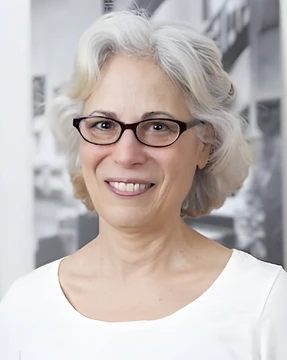
Charles Tilly
Sociologist of state formation, social movements, and contentious politics.

Charles Tilly (May 27, 1929 – April 29, 2008) was an American sociologist, political scientist, and historian who wrote on the relationship between politics and society. He was a professor of history, sociology, and social science at the University of Michigan from 1969 to 1984 before becoming the Joseph L. Buttenwieser Professor of Social Science at Columbia University. He has been described as "the founding father of 21st-century sociology" and "one of the world's preeminent sociologists and historians." He published widely across topics such as urban sociology, state formation, democracy, social movements, labor, and inequality.
- born
- May 27, 1929
- died
- April 29, 2008
- field
- Sociology, political science, history
- nationality
- American
- known_for
- Historical sociology, state formation, social movements, contentious politics, l
Verified Timeline
Lore & Background
Charles Tilly was born in Lombard, Illinois, to Naneth and Otto Tilly, Welsh-German immigrants. He graduated from York Community High School in 1946, then from Harvard University in 1950 with a Bachelor of Arts magna cum laude. He served in the U.S. Navy as a paymaster of an amphibious squadron during the Korean War, and completed his Doctor of Philosophy in Sociology at Harvard in 1958. While at Harvard, he was a student in the Department of Social Relations during the "Harvard revolution" in social network analysis. Tilly was a teaching assistant to Pitirim Sorokin, who often retorted to Tilly's ideas with "A very good idea, Mr. Tilly, but Plato said it better." Tilly eventually turned to Barrington Moore Jr. and George C. Homans to supervise his dissertation, but never failed to say that Sorokin was a great person. Tilly taught at the University of Delaware (1956–1962), Harvard University (1963–1966), the University of Toronto (1965–1969), the University of Michigan (1969–1984), The New School (1984–1996), and Columbia University (1996–2008). Over his career, he wrote more than 600 articles and 51 books and monographs. His most highly cited books are: the edited volume The Formation of National States in Western Europe (1975), From Mobilization to Revolution (1978), Coercion, Capital, and European States, AD 990-1990 (1990), Durable Inequality (1998), and Dynamics of Contention (2001).
Reader's Guide
Charles Tilly's significance lies in his foundational contributions to historical sociology, the study of state formation, social movements, and contentious politics. He was an influential proponent of large-scale historical social science research, as exemplified by his 1984 book Big Structures, Large Processes, Huge Comparisons, in which he argued against eight common ideas in social theory—including the view that societies evolve through fixed stages and that rapid differentiation generates disorder—and advocated for "historically grounded huge comparisons of big structures and large processes." Tilly's work on state formation advanced a predatory theory of the state: in "War Making and State Making as Organized Crime," he described governments as simulating or fabricating threats of external war to compel compliance, warning against the contractual model and calling states "our largest examples of organised crime." In social movements, he identified three defining features: a sustained campaign, a repertoire of contention, and public displays of worthiness, unity, numbers, and commitment (WUNC). His collaborative work with Doug McAdam and Sidney Tarrow in Dynamics of Contention sought to connect various forms of contentious politics and focus on causal mechanisms such as brokerage, category formation, and elite defection. At Columbia, along with Harrison White, Tilly played a key role in the emergence of the New York School of relational sociology.
Did You Know?
- Tilly served in the U.S. Navy as a paymaster of an amphibious squadron during the Korean War.
- As a teaching assistant to Pitirim Sorokin, Tilly often heard Sorokin retort, 'A very good idea, Mr. Tilly, but Plato said it better.'
- Tilly wrote more than 600 articles and 51 books and monographs over his career.
- In 1968, Tilly presented a report on European collective violence to the Eisenhower Commission, a body formed under the Johnson administration.
- Tilly argued that social movements are characterized by three features: a campaign, a repertoire of contention, and public displays of worthiness, unity, numbers, and commitment (WUNC).
A Career Spanning Five Decades and Six Institutions
Charles Tilly's academic trajectory stretched across nearly half a century and multiple distinguished universities. After completing his doctorate at Harvard in 1958, he held appointments at the University of Delaware, Harvard, the University of Toronto, the University of Michigan, The New School, and ultimately Columbia University, where he occupied the Joseph L. Buttenwieser Professorship of Social Science until his death in 2008. At Michigan, he concurrently held chairs in both history and sociology before assuming the Theodore M. Newcomb Professorship. His scholarly output was extraordinary: more than 600 articles and 51 books or monographs. Among his most frequently cited volumes are The Formation of National States in Western Europe (1975), From Mobilization to Revolution (1978), Coercion, Capital, and European States (1990), Durable Inequality (1998), and Dynamics of Contention (2001). This vast body of work, spanning urban sociology, state formation, democracy, social movements, labor, and inequality, earned him the description of the founding father of 21st-century sociology and secured his standing as one of the world's preeminent sociologists and historians.
Challenging Conventional Wisdom: The Comparative Historical Method
In his 1984 book Big Structures, Large Processes, Huge Comparisons, Tilly articulated a research philosophy that pushed back against eight widely held assumptions in social theory. He rejected the notion that societies exist in isolation, that collective behavior reduces to individual mental states, that societies are undifferentiated blocs, that they progress through fixed evolutionary stages, that differentiation is a universal master process, that rapid differentiation inevitably produces disorder, that swift social change generates abnormal behaviors such as crime, and that legitimate and illegitimate conflict arise from fundamentally different origins. In their stead, he advocated for historically grounded, large-scale comparisons of structures and processes, always attentive to the particular temporal and spatial context of each case. This program—often termed historical sociology or comparative historical analysis—centered on two sweeping macro processes: the development of capitalism and the formation of modern states. At Columbia, working alongside Harrison White, Tilly also helped give rise to the New York School of relational sociology, further expanding the methodological repertoire available to social scientists.
Contentious Politics and the Study of Collective Action
A defining thread running through much of Tilly's scholarship was the collective action of groups that challenged entrenched power. He devoted two major monographs to this theme: The Contentious French. Four Centuries of Popular Struggle (1986) and Popular Contention in Great Britain, 1758–1834 (1995). His engagement with contentious politics was not confined to the academy. In 1968, he presented a report on European collective violence to the Eisenhower Commission, a body convened under the Johnson administration to assess urban unrest amid the Civil Rights Movement; that report was published in Volume 1 of Violence in America. His research on 19th-century European contention informed his analysis of contemporary American violence, and his interest in cities and communities became tightly interwoven with his passion for understanding social movements and collective action. Later, he co-authored Dynamics of Contention (2001), a work that became one of his most cited and that profoundly shaped how scholars across disciplines study protest, revolution, and democratization.
Formative Years: Harvard, the Navy, and a Gruff Mentor
Born in Lombard, Illinois, in 1929 to Welsh-German immigrant parents, Tilly graduated from York Community High School in 1946 before matriculating at Harvard, where he earned his B.A. magna cum laude in 1950. He then served in the U.S. Navy as a paymaster of an amphibious squadron during the Korean War before returning to complete his Ph.D. in Sociology in 1958. At Harvard, he served as a teaching assistant to Pitirim Sorokin, one of the era's towering figures in sociology. Tilly fondly recalled Sorokin's characteristically blunt habit of dismissing his ideas with the remark, "A very good idea, Mr. Tilly, but Plato said it better." Although he ultimately turned to Barrington Moore Jr. and George C. Homans to supervise his dissertation, Tilly never stopped acknowledging Sorokin as a great person—even while himself eschewing any great-person theory of history. He was also a student during the so-called Harvard revolution in social network analysis, an experience that left a lasting imprint on his later commitment to relational and network-based inquiry.
Frequently Asked Questions
Who is Charles Tilly?
Charles Tilly (1929–2008) was an American scholar who worked across sociology, political science, and history to explain how politics and society shape one another. He is widely regarded as one of the most influential social scientists of the late twentieth century.
What is Charles Tilly best known for?
Tilly is most celebrated for his research on state formation, social movements, and what he termed contentious politics. His large-scale comparative studies gave scholars a way to trace how states emerge and how ordinary people challenge existing power structures.
Where did Charles Tilly teach and hold his major academic posts?
He spent much of his career at the University of Michigan before moving to Columbia University, where he held the Joseph L. Buttenwieser Professorship of Social Science. His Columbia years cemented his reputation as a leading voice in the social sciences.
Why is Charles Tilly considered so important to modern sociology?
He is often called the "founding father of 21st-century sociology" because his frameworks for studying conflict, state-building, and collective action became foundational tools for the entire field. His insistence on historically grounded, comparative methods still sets the standard for how political sociologists design research.
What makes Tilly's approach different from other political theorists?
Tilly deliberately refused to let disciplinary walls separate sociology, political science, and history, treating them as one continuous inquiry. This interdisciplinary stance let him build theories about state emergence and social conflict that purely single-discipline scholars often could not.
More in Modern Political Theorists And Sociologists 1-18
Spotted an error? Know more?
This is a living reference — every entry is fact-audited, and reader corrections feed straight into our audit queue. Suggest an edit · See this site's audit record