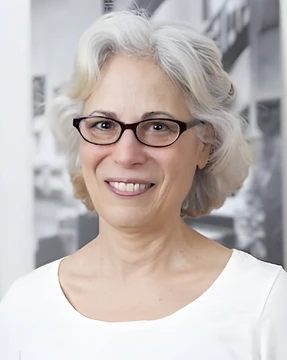
Pierre Bourdieu
French sociologist who analyzed power, culture, and social reproduction.

Pierre Bourdieu was a French sociologist and public intellectual whose work focused on the dynamics of power in society, especially the diverse and subtle ways in which power is transferred and social order is maintained within and across generations. His contributions to the sociology of education, the theory of sociology, and sociology of aesthetics have achieved wide influence in several related academic fields, including anthropology, media and cultural studies, education, popular culture, and the arts. During his academic career he was primarily associated with the School for Advanced Studies in the Social Sciences in Paris and the Collège de France.
- born
- 1 August 1930
- died
- 23 January 2002
- field
- Sociology
- nationality
- French
- known_for
- Cultural reproduction, habitus, field, symbolic violence, cultural capital, soci
Verified Timeline
Lore & Background
Bourdieu was born in Denguin, in southern France, to a postal worker and his wife; the household spoke Béarnese, a Gascon dialect. He was educated at the Lycée Louis-Barthou in Pau before moving to the Lycée Louis-le-Grand in Paris, then gained entrance to the École Normale Supérieure, where he studied philosophy alongside Louis Althusser. After his agrégation, he worked as a lycée teacher at Moulins for a year before conscription into the French Army in 1955. Deployed to Algeria in October 1955 during its war of independence, he served in a unit guarding military installations before being transferred to clerical work. After his military service, he stayed on as a lecturer in Algiers. During the Algerian War in 1958–1962, he undertook ethnographic research into the clash through a study of the Kabyle peoples of the Amazigh, laying the groundwork for his anthropological reputation. His first book, Sociologie de l'Algérie (1958), became an immediate success in France and was published in the United States in 1962. In 1960, Bourdieu returned to the University of Paris before gaining a teaching position at the University of Lille, where he remained until 1964. From 1964 onwards he held the position of Professor (Directeur d'études) in Section VI of the École Pratique des Hautes Études (the future École des Hautes Études en Sciences Sociales), and from 1981 the Chair of Sociology at the Collège de France (held before him by Raymond Aron and Maurice Halbwachs). In 1968, Bourdieu took over the Centre de Sociologie Européenne, founded by Aron, which he directed until his death. In 1975, with the research group he had formed at the Centre, he launched the interdisciplinary journal Actes de la recherche en sciences sociales. In 1993 he was honored with the Médaille d'or du Centre National de la Recherche Scientifique. In 1996 he received the Goffman Prize from the University of California, Berkeley and in 2001 the Huxley Medal of the Royal Anthropological Institute. Bourdieu died of cancer at the age of 71.
Reader's Guide
Bourdieu's significance lies in his development of concepts such as habitus, field, and various forms of capital—cultural capital, social capital, symbolic capital, and financial capital—to explain how social hierarchies are reproduced. His work emphasized the corporeal nature of social life and the role of practice and embodiment, opposing the idealist tradition of much of Western philosophy. Building upon and criticizing the theories of Karl Marx, Sigmund Freud, Max Weber, Émile Durkheim, Claude Lévi-Strauss, Erwin Panofsky, and Marcel Mauss among others, his research pioneered novel investigative frameworks and methods. His best-known book is Distinction: A Social Critique of the Judgment of Taste (1979), in which he argues that judgments of taste are acts of social positioning. The argument is put forward by an original combination of social theory and data from quantitative surveys, photographs and interviews, in an attempt to reconcile difficulties such as how to understand the subject within objective structures. The book was named 'the sixth most important sociological work of the twentieth century' by the International Sociological Association. Bourdieu's work emphasized how social classes, especially the ruling and intellectual classes, preserve their social privileges across generations despite what he called a myth that contemporary post-industrial society boasts equality of opportunity and high social mobility, achieved through formal education.
Did You Know?
- Bourdieu's household spoke Béarnese, a Gascon dialect, when he was growing up in Denguin.
- He was deployed to Algeria in October 1955 during its war of independence and served in a unit guarding military installations before being transferred to clerical work.
- His first book, Sociologie de l'Algérie (1958), became an immediate success in France and was published in the United States in 1962.
- Bourdieu launched the interdisciplinary journal Actes de la recherche en sciences sociales in 1975 with the research group he had formed at the Centre de Sociologie Européenne.
- He received the Médaille d'or du CNRS in 1993, the Goffman Prize in 1996, and the Huxley Medal in 2001.
Frequently Asked Questions
Who is Pierre Bourdieu?
Pierre Bourdieu (1930–2002) was a French sociologist and public intellectual best known for mapping how power operates through culture, education, and social institutions. His work gave scholars a shared vocabulary for describing the invisible mechanisms that keep social hierarchies intact across generations.
What are Bourdieu's signature concepts?
His most cited ideas include habitus (internalized dispositions shaped by one's social position), field (structured arenas of competition), cultural capital (non-financial assets like education and taste), and symbolic violence (the subtle imposition of dominant norms). Together these tools let researchers trace how inequality reproduces itself without overt coercion.
What academic fields did Bourdieu influence?
Though trained as a sociologist, his framework became foundational in anthropology, media and cultural studies, education research, and the arts. Scholars in those areas borrowed his language of fields, capitals, and habitus to analyze everything from university admissions to the art market.
Why do fans of political theory keep returning to Bourdieu?
He offered a concrete, empirical way to connect micro-level everyday practices to macro-level structures of domination, filling a gap between Marxist class analysis and individual psychology. His insistence that power is often exercised through taste, language, and institutional rituals rather than force made his work feel immediately relevant to anyone studying modern institutions.
When and where did Bourdieu live?
He was born on 1 August 1930 in the French Pyrenees and died on 23 January 2002 in Paris. His career spanned mid-twentieth-century France, and he remained a prominent public voice on education, media, and politics until his death.
More in Modern Political Theorists And Sociologists 1-18
Spotted an error? Know more?
This is a living reference — every entry is fact-audited, and reader corrections feed straight into our audit queue. Suggest an edit · See this site's audit record